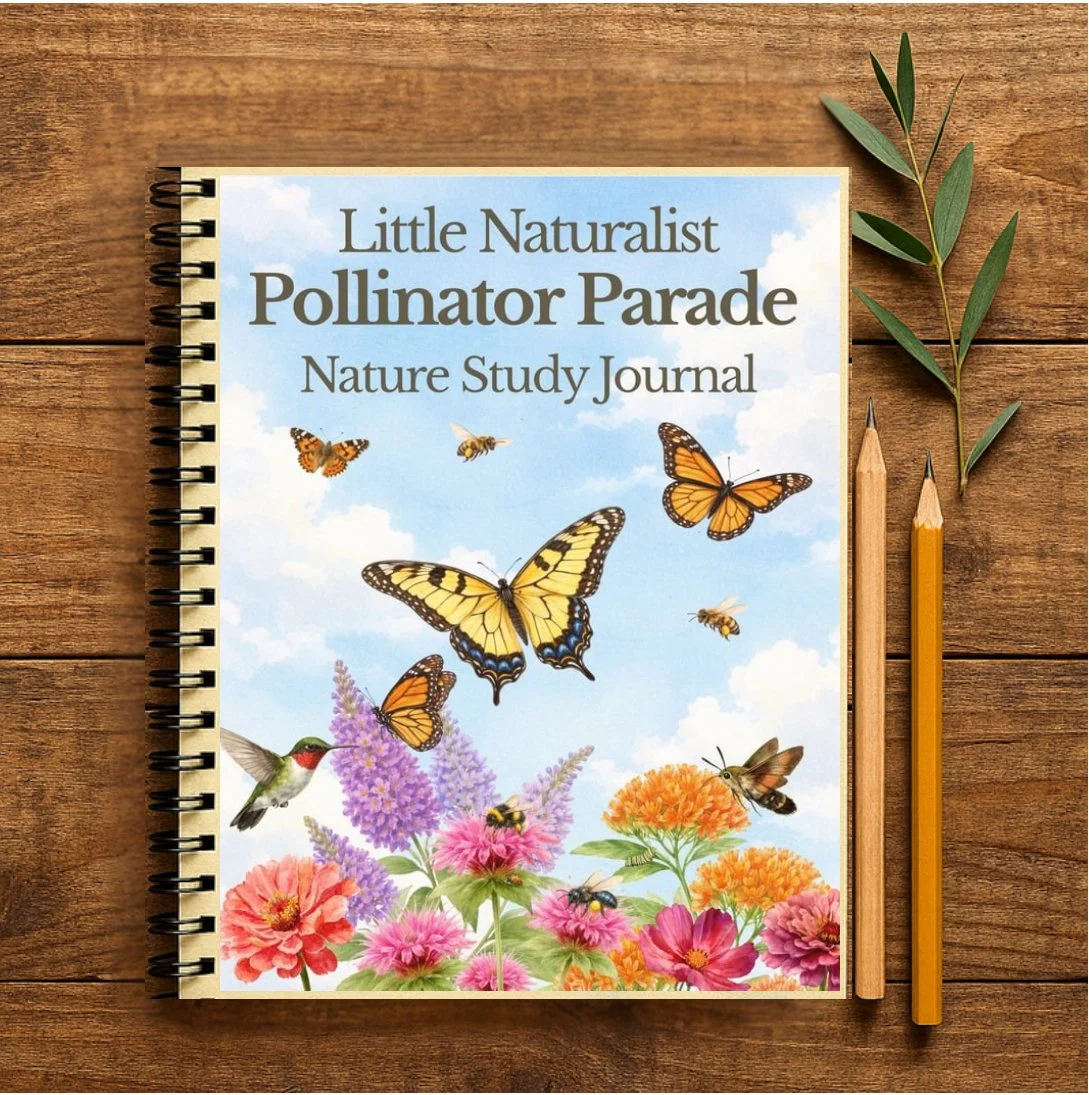
On a warm spring morning, when the garden is just beginning to hum with life, something magical happens. A bee pauses on a blossom. A butterfly drifts by, wings glowing in the sunlight. A child notices—and suddenly the world feels alive in a new way.
Pollinator Parade was created for these moments.
This workbook invites children to slow down, observe carefully, and discover the quiet but essential work of pollinators—the tiny creatures who help our gardens grow, our food flourish, and our ecosystems thrive.
Why Pollinators Matter (Even to Young Children)
Pollinators are responsible for much of the food we eat, yet their work often goes unnoticed. Bees, butterflies, moths, beetles, and birds quietly move from flower to flower, carrying pollen that allows plants to produce fruits and seeds.
When children learn about pollinators, they begin to see the natural world as an interconnected whole. Gardens are no longer just places to play—they become living classrooms filled with purpose, beauty, and responsibility.
A Gentle, Hands-On Approach to Nature Study
Pollinator Parade is designed with a Charlotte Mason–inspired approach, encouraging:
Careful observation
Short, meaningful lessons
Living ideas presented simply and beautifully
Opportunities for children to narrate, draw, and reflect
Rather than overwhelming children with facts, this workbook guides them into relationship with nature—helping them recognize pollinators as neighbors worth protecting.
What You’ll Find Inside Pollinator Parade
This workbook is both educational and inviting, making it easy to use at home, in a homeschool group, or alongside outdoor exploration.
Inside, children will explore:
What pollinators are and why they are important
Common pollinators found in gardens and meadows
The life cycle of pollinators like bees and butterflies
How flowers and pollinators depend on one another
Simple ways children can help pollinators thrive
Activities include gentle reading passages, nature-based prompts, drawing and observation pages, and thoughtful copywork that reinforces learning without feeling forced.
Perfect for Spring and Summer Learning
Pollinator Parade pairs beautifully with gardening, nature walks, and backyard observation. Children can step outside, watch pollinators in real time, then return to the workbook to record what they noticed.
It works well as:
A standalone nature study
A companion to garden clubs or co-ops
A seasonal addition to spring and summer learning
A quiet morning lesson followed by outdoor free play
Teaching Children Stewardship Through Wonder
One of the most meaningful outcomes of studying pollinators is that children begin to care deeply about protecting them. When a child understands that a bee’s work matters, they see their own role differently too.
Planting flowers, leaving wild spaces, and choosing kindness toward small creatures become natural extensions of learning—not obligations, but acts of stewardship rooted in love and understanding.
An Invitation to Slow Down and Notice
Pollinator Parade is more than a workbook—it’s an invitation. An invitation to pause, to look closely, and to marvel at the small, unseen work happening all around us.
If you’re hoping to nurture curiosity, attentiveness, and a lasting appreciation for nature in your children, this study is a gentle place to begin.