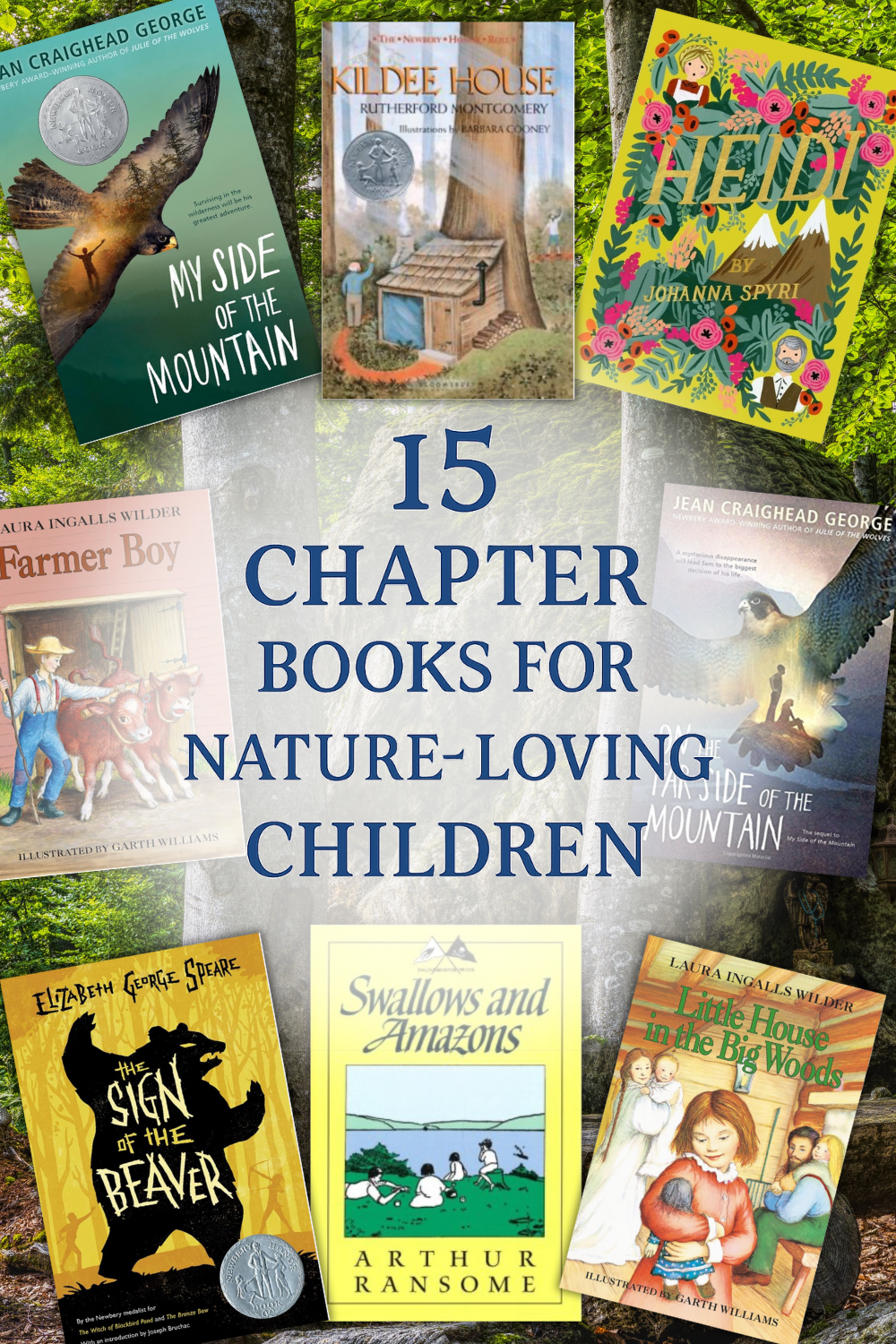
There is something deeply forming about stories that unfold outdoors—where the rhythm of life is shaped by seasons, animals, weather, and work close to the land. These are the kinds of books children linger over. They invite slower reading, careful noticing, and a growing affection for the natural world.
Whether your child dreams of living in a treehouse, tending animals, roaming mountains, or paddling quiet waters, the following chapter books gently nurture a love for nature while offering rich language, memorable characters, and meaningful ideas.
Here are 15 wonderful chapter books for nature-loving children, perfect for read-alouds or independent reading.
by Jean Craighead George
A true classic of wilderness literature, this story follows Sam Gribley as he leaves city life to live independently in the Catskill Mountains. His deep respect for nature, careful observation, and survival skills make this an unforgettable book for children who long for adventure and self-reliance.
2. On the Far Side of the Mountain
by Jean Craighead George
A beautiful companion to My Side of the Mountain, this book follows Sam’s sister as she seeks her own path in the wilderness. It expands the themes of nature study, independence, and resilience in a way that feels both grounded and hopeful.
3. Heidi
by Johanna Spyri
Set high in the Swiss Alps, Heidi is a gentle, soul-nourishing story of a young girl shaped by mountain air, goat paths, wildflowers, and a simple life close to nature. This timeless book reminds us that fresh air, beauty, and love are powerful teachers.
4. Little House in the Big Woods
by Laura Ingalls Wilder
The first in the Little House series, this story beautifully portrays pioneer life rooted in the seasons, home skills, and the natural world. From maple sugaring to winter evenings by the fire, it offers children a vivid sense of living with the land.
5. Farmer Boy
by Laura Ingalls Wilder
Rich in detail and daily rhythms, Farmer Boy shows farm life through the eyes of Almanzo Wilder. Children gain a strong appreciation for hard work, food production, animals, and the rewards of a life shaped by seasons and responsibility.
by Elizabeth George Speare
Set in the Maine wilderness, this powerful story explores survival, friendship, and cultural understanding. Nature is not just a setting here—it is a teacher, demanding patience, humility, and skill.
by Arthur Ransome
This joyful adventure follows a group of children who sail, camp, explore, and create their own world on a lake. It captures the magic of free outdoor play, imagination, and the quiet confidence that grows from time spent in nature.
8. Kildee House
by Rutherford Montgomery
A quiet, thoughtful story about a boy who builds a treehouse and discovers that animals are drawn to it as well. This book beautifully illustrates stewardship, empathy for wildlife, and the wonder of observing animals up close.
9. Island of the Blue Dolphins
by Scott O’Dell
Based on a true story, this novel follows a girl surviving alone on an island. It is rich in natural observation, resilience, and respect for animals, making it a compelling read for children drawn to survival stories and coastal landscapes.
10. Hatchet
by Gary Paulsen
A modern survival classic, Hatchet tells the story of a boy stranded in the Canadian wilderness who must learn to live off the land. The book emphasizes perseverance, adaptation, and learning directly from nature.
11.
by Louise Erdrich
This beautifully written novel follows an Ojibwe girl and her family, offering a vivid picture of seasonal life, traditions, and deep respect for the natural world. It pairs wonderfully with nature study and cultural learning.
by Holling C. Holling
Part story, part geography lesson, this quiet book follows a small carved canoe as it journeys from the Great Lakes to the sea. The landscape itself becomes the main character, encouraging children to notice waterways, wildlife, and geography.
by Kenneth Grahame
A poetic celebration of rivers, fields, and woods, this classic story invites children into a slower, more contemplative relationship with nature. Its lyrical language makes it an excellent read-aloud.
by Sid Fleischman
While humorous and adventurous, this story also captures the rugged landscapes of the Gold Rush era and the spirit of exploration that often accompanies nature-based tales.
by Farley Mowat
This charming autobiographical story recounts the author’s childhood experiences raising owls. It is warm, funny, and filled with genuine affection for animals and the natural world.
Why Nature-Centered Stories Matter
Books like these do more than entertain. They help children:
Develop careful observation skills
Build empathy for animals and the environment
Appreciate seasonal rhythms and simple living
Cultivate imagination rooted in reality
Paired with outdoor time, nature journals, or seasonal studies, these stories become part of a child’s inner landscape—stories they carry with them long after the final page.