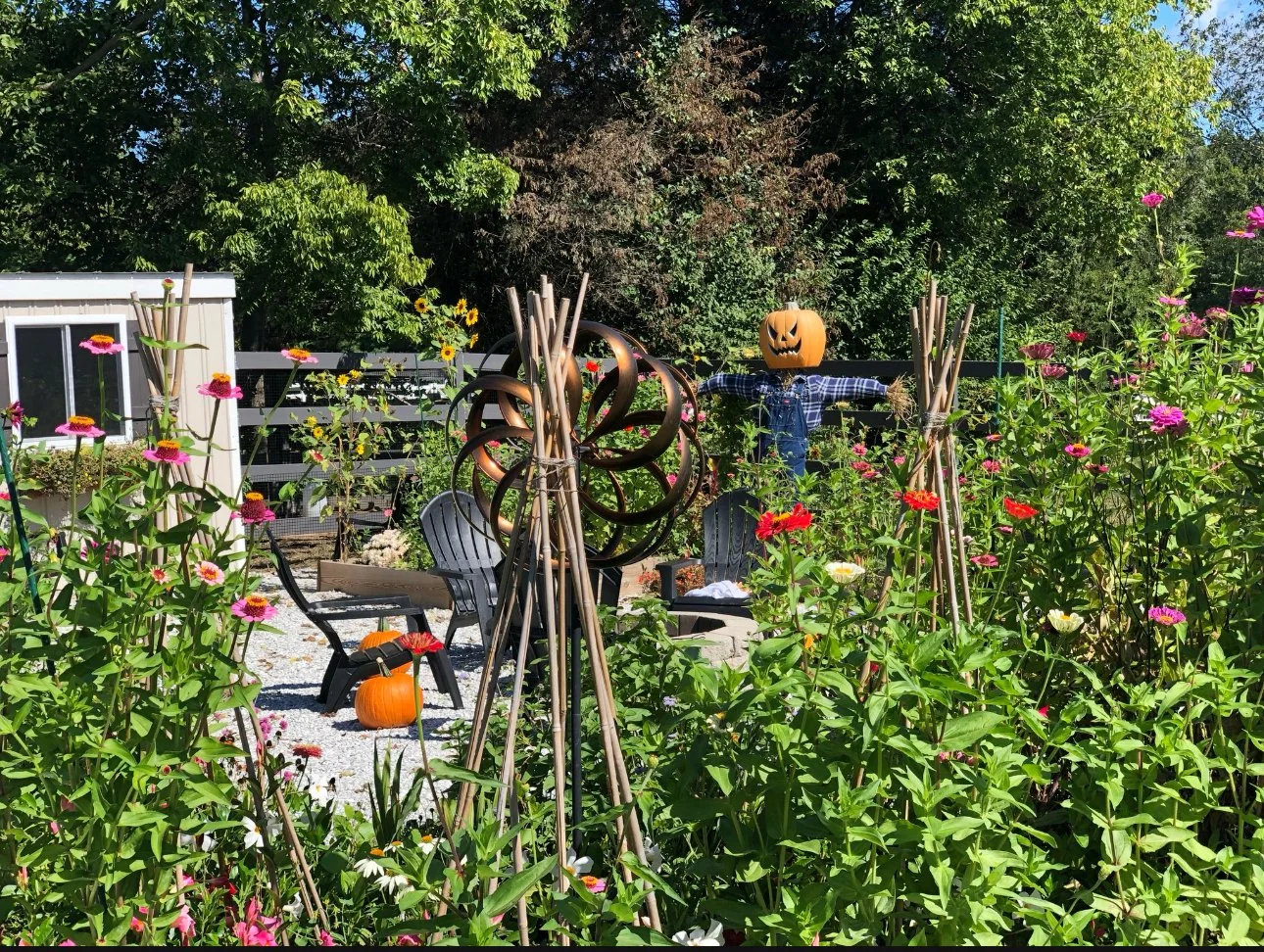
Our Garden this fall, abundant and a bit out of control but still a beautiful gift from God.
Creating connection, curiosity, and hands-on learning in the spring season
There’s something wonderful about children learning with their hands in the soil — watching them discover worms, notice tiny sprouts, and delight in the first green shoots of spring. Gardening has a way of slowing us down and helping us notice the quiet miracles of growth all around us.
This year, our homeschool group is doing a bi-weekly Gardening Club, a simple way to bring families together outdoors for shared learning, laughter, and a bit of dirt under our fingernails. In the past we have done Nature Club which we will explore in more detail in a future post. Moving in to this Spring I want to explore hands on gardening with the children of our group who’s ages range from around 5-10 years old. Obviously we have some younger siblings that will join from time to time but the gardening club will be designed with younger school aged children in mind.
Why a Gardening Club?
A gardening club gives children a chance to connect what they learn with what they see and touch. It teaches patience, care, and responsibility — but also wonder and joy. Gardening naturally blends science, art, and nature study in a way that feels alive and memorable.
Even if families don’t have large gardens at home, children can still learn by tending small pots, growing herbs on a windowsill, or caring for plants at a group meet-up spot. What matters most is regular observation and hands-on experience — not the size of the space.
How We’re Doing It
Our group plans to meet every other week in person this spring. During those meetups, we’ll garden together, explore nature, and complete one hands-on activity as a group.
On the weeks in between, the children will continue caring for their own gardens at home — whatever form those gardens take. Early in the season, each child will choose or plan a small gardening space of their own: a single pot, a raised bed, a row of vegetables, or a windowsill of herbs.
This rhythm gives children the chance to experience gardening both in community and independently, watching things grow in different environments while taking ownership of their little patch of earth.
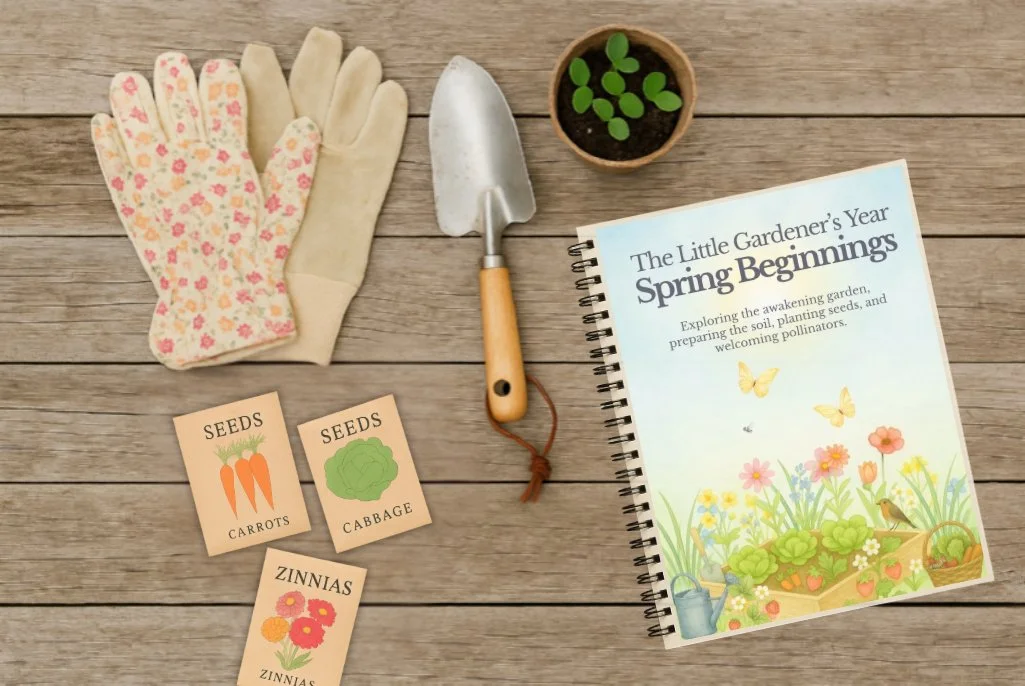
If you’d like a gentle guide to follow along, The Little Gardener’s Year: Spring Beginnings was created with homeschool groups and families in mind.
The workbook offers 12 spring lessons that move naturally from preparing soil and planting seeds to welcoming pollinators and celebrating the first harvests. Each lesson includes:
A short reading and watercolor illustration to introduce the topic
A what we’re learning page and simple hands-on activity for the garden or outdoor space
A drawing page for recording what was observed and finally a reflection page again designed with early learners in mind. This reflection page encourages children to share their observations by answering simple questions pertaining to the lesson in short answers while practicing neat and tidy handwriting in the space provided.
It’s flexible and adaptable — perfect for group meetups, classroom use, or family learning at home. Even without a large garden, the lessons help children connect with nature through small, achievable projects.
Of course, you don’t need the workbook to start a gardening club! All you truly need is a group of curious children, a bit of soil, and a willingness to get outside and learn together. But if you’re looking for a ready-made structure to guide your gatherings and home activities, Spring Beginnings is a lovely companion to the season.
Tips for Starting Your Own Homeschool Gardening Club
Choose a Meeting Spot – A backyard, community garden, or local park will do.
Start Small – Encourage each child to tend a simple garden space at home that fits their family’s lifestyle.
Meet Regularly – Weekly or bi-weekly gatherings help children stay engaged.
Follow the Seasons – Begin with soil prep and seed starting, then move toward pollinators and harvest.
Celebrate Together – End your season with a small harvest picnic or “garden to table” day to share what everyone has grown and learned.